
For almost a year now I have played Warframe (Digital Extremes, 2013), a free-to-play online sci-fi-shooter. I have been convinced to give it a try by someone who told me that there is an Egyptian (inspired) Warframe called Inaros.
I created an account and got Inaros (added with Update 18.5, March 4th 2016) as one of my first Warframes as a gift from a friend. As of the time of writing there are currently over 60 individual Warframes available to play, differing in design and abilities (42 base frames and several prime versions). And they differ in design and abilities. They are inspired by a whole lot of different cultures, myths, and elements. This includes mythological characters such as Oberon and Titania or frames like Frost, Ember and Volt whose powers are based on ice and fire and electricity respectively. Basically, Warframes are equipment to fight. In a few cases however they can act independently.
Since this blog entry grew way too long it has been split into two halves. The first one focusses on how Inaros as a Warframe (and his accompanying cosmetics) is coded. In the second half I will discuss the historical origin and context of Inaros and the ancient Egyptian ruler of this name.
So, how is Inaros coded as ancient Egyptian? This happens on various levels. First, the abilities of the Warframe are heavily based on sand. He can throw sand into the faces of enemies and cause sandstorms. This is not exclusive for ancient Egypt, but it is part of the western idea of this culture.
His fourth ability, Scarab Swarm, is more clearly Egyptian inspired. He can conjure an armour made out of (living) scarabs. After being put into bleed-out Inaros will not stay on the ground like other frames but will get enclosed by a sarcophagus.
Sarcophagi as well as scarabs are clearly connected to ancient Egypt. Reasons for this are that sarcophagi are one of the best-known groups of archaeological objects. Scarabs were an important part of Egyptian imagery and numerous amulets in form of these dung beetles are preserved. All in all, the religious relevance of these beetles is widely known, especially in connection to the sunrise and the creation of the world.

https://de.wikipedia.org/wiki/Skarab%C3%A4us#/media/Datei:Hidden_treasures_19.jpg (10.01.2020)
During his own unique questline Inaros is found on the planet Mars. The desert-planet is basically predestined for this character that is based on sand. There the player has to enter his tomb to find the parts of the Warframe. While doing so they can almost feel like an adventurer searching for a treasure, just this time on Mars instead of Egypt and using hi-tech weapons instead of gear from the 19th century.
After arriving on Mars, the player learns that Inaros saved the people of this planet and was worshipped as god-king because of this, similar to a Pharaoh. In a final battle, however, he was killed and divided into three parts which were each were encased in an urn. The urns are designed in a golden colour and wrapped into linen binds like that of a mummy. Similarly, the basic Inaros skin shares similarities to mummies as well.


One thing that is particularly interesting is another aspect of Inaros’ abilities. First, he can steal the health of enemies and use it for himself through which the enemies turn into sand shadows. Second, he can also absorb energy from enemies when he is in the sarcophagus and revive himself with it without having another player around to help, which is a unique ability.
This is (of course) not typical for an Egyptian Pharaoh. Nevertheless, it feels fitting and familiar. It is a common trope in “The Mummy”-movies (for example in 1999 and 2017), in which mummies have to restore themselves by killing people. This motif is referenced in the mummy-like iconography of Inaros as well.
This motif is connected to ancient Egypt not because of scientific research, but through the depiction of mummies as monsters in modern pop-culture.
Not only is the design of the basic skin a reference to a mummy, but also the animation set “agile” goes into the same direction. When equipped the Warframe is lurching as if it could drop dead any second.

The other animation set lets him look more noble and dignified. Inaros is standing upright and holds his arms crossed in front of his chest. This pose is especially known for Pharaohs who were often depicted and also mummified like this.

Two of Inaros’ additional skins are Tennogen, fan-designs added into the game that are not inherently part of the lore canon so they shall not be discussed here. One other is called “Ramesses” and is turning away from the design as a mummy. The title however is enough to form the association, as the name “Ramesses” most likely refers to Ramesses II, the best-known Pharaoh named Ramesses, who is especially known for achievements in war and architecture.
Furthermore, there are additional helmets available: The first one is “Anubis Helmet” which has the form of a dog head associated with the god Anubis. The second one being the “Canopic Helmet”. Canopic jars are four vessels in which the organs of the dead are stored after the mummification.
Interestingly, well known and popular parts of pharaonic iconography like the Nemes (a striped headcloth) are not included in its design.
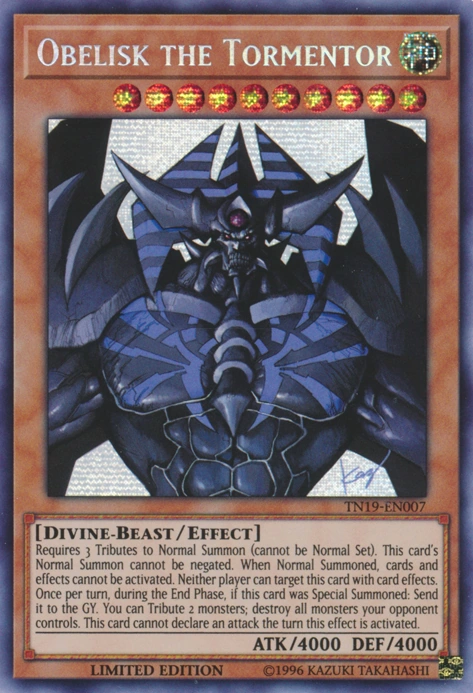
At least as well known is the beard of Egyptian Pharaohs which is included in his design. On the top of the helmet, however, is a strip of textile attached. This can be found in ancient Egyptian iconography of the god Reschef. Reschef can already be traced back to Syrian-Palestinian sources from the 3rd millennium BC. Through more intense contact with this region its gods became popular in New Kingdom Egypt (ca. 1500–1100 BC), one of them being Reschef. He was depicted with such a piece of cloth attached to the crown of Upper Egypt. As a god of war and protection, he often was connected to the Pharaoh, whose power was compared to that of the god.


The depiction of Inaros as Egyptian Pharaoh in space is referring to different levels of Egyptian imaginary. On the one hand some aspects are based on archaeological and historical facts that are more or less commonly known.
On the other hand there are more general signifiers like “sand/desert” as well as topoi that are not directly connected to ancient Egypt as it is reconstructed in Egyptology. These are part of modern pop culture which made them famous, sometimes more famous than historical research (like the mummy as a “monster”).
The name itself, Inaros, refers to a historical and literary figure, which will be the topic of the second part.
I hope I could capture your interest and see you in the next text!
If you want to stay updated, you can follow me on twitter. I am open for questions and suggestions, so feel free to leave a comment!
 Games and Antiquity
